Youth Justice in Transition: Penal Populism and the Decline of Nordic Exceptionalism in Sweden How to investigate a constitutional culture?: The case for the focus group method in comparative constitutional studies
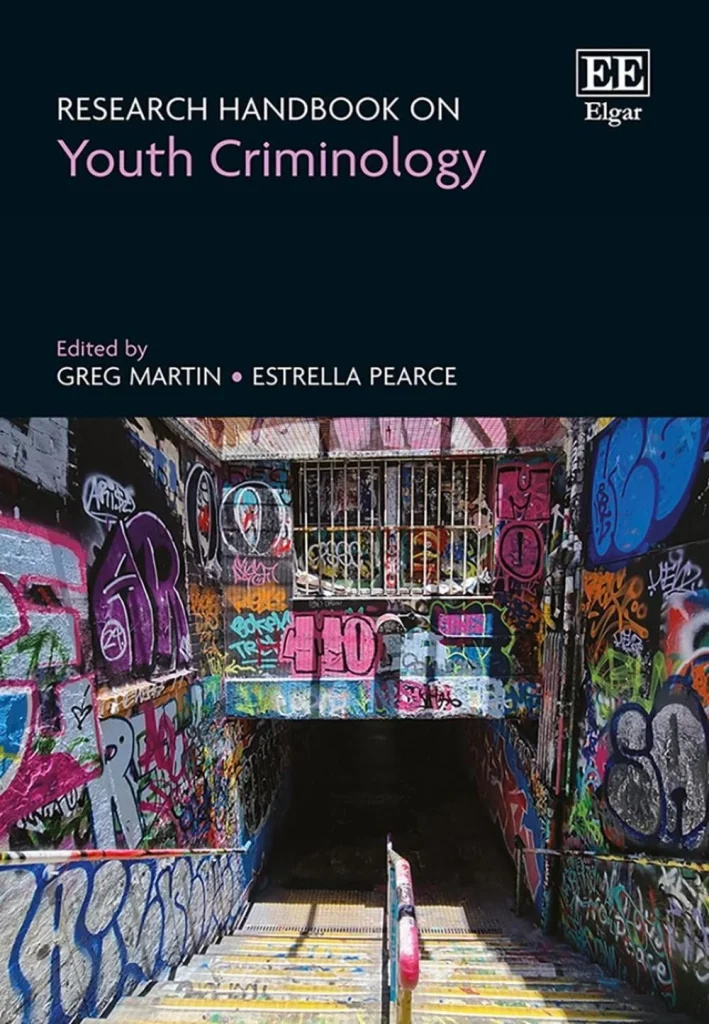
By Orlaith Rice, Silvia Gagliardi and Daniela Rodriguez Gutierrez (2025) In E. Pearce & G. Martin (Eds.) Research Handbook on Youth Criminology. Elgar.
Abstract
The Nordic model of youth justice is highly regarded globally for its penal welfarist approach. Sweden’s rehabilitative attitude when it comes to young offenders has a long history. Sweden also has a more recent history of high net inward migration. A documented increase in certain types of violent crime, gun violence and gang activity has been capitalised upon to marginalise Sweden’s expanding immigrant population. In 2022, the Swedish government abolished the automatic sentence reduction young adults receive for serious crimes: the so-called ‘youth rebate’. This chapter argues that this development is an attempt to address the current public, political and media backlash against leniency in both youth justice policy and migration policy amid fear of crime perceived to be linked to, in particular, young immigrant men. In the months following this abolition, crime and migration dominated the discourse surrounding the 2022 general election, which resulted in a right-leaning coalition government. The removal of the ‘youth rebate’ indicates a punitive turn in youth justice policy, and the 2022 election results indicate that a stricter penal attitude persists in Swedish society. Taken together, they call the Nordic penal exceptionalism thesis into question. This chapter analyses these developments through the lens of penal populism. This research is informed by qualitative focus group data collected in Sweden in 2021 and 2022, within the framework of a European Research Council-funded project on the ‘Foundations of Institutional Authority’.
Keywords: Constitutional culture; Comparative constitutional methods; Qualitative methods; Sociological constitutionalism
Link to full article available here.
 English (UK)
  Magyar
  Svenska
  Polski
  Español